How Many Creases Are There in Cricket? A Complete Guide for Beginners
How Many Creases Are There in Cricket?
How Many Creases Are There in Cricket?
Cricket is a game with a whole lot of rules, markings, and task positions that assist ensure honest play. One of the most important components of the cricket pitch is the set of creases. If you’re new to the game, you can marvel, “How many creases are there in cricket?”
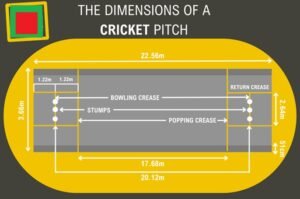
The easy solution is that there are 4 creases marked at each end of a cricket pitch. These include one bowling crease, one popping crease, and two skip lower back creases. Since a cricket pitch has two ends, the whole pitch consists of 8 crease traces in total.
What Is a Cricket Crease?
A crease is a white line marked on the cricket pitch. These traces define important areas for the batter and the bowler. Umpires use the crease markings to decide whether or now not or now not a delivery is a wide, whether or not or now not or not a batter is safe, and whether or not a run-out or stumping has occurred.
Without crease markings, several of cricket’s criminal guidelines might be impossible to apply as they should be.
Types of Creases in Cricket
At each end of the pitch, there are 4 crease traces.
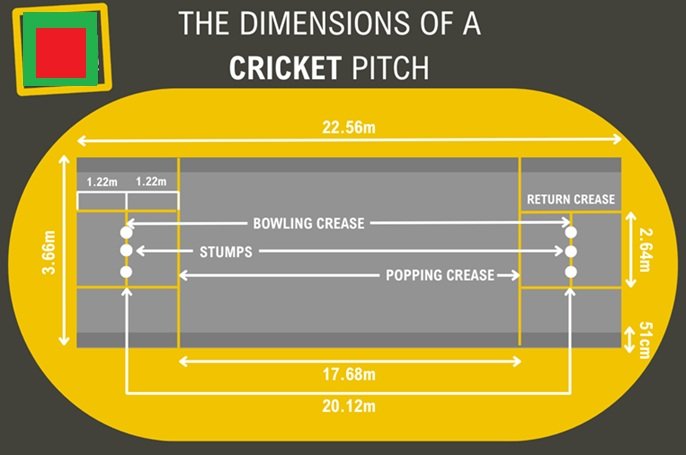
1. Bowling Crease
The bowling crease is the street on which the three stumps are placed.
It is the imperative reference line at each forestall of the wicket. The stumps stand proper now in this crease, making it one of the most vital markings on the pitch.
Purpose:
- Supports the wicket.
- Acts because the reference for the go-back creases.
- Helps outline the wicket place.
2. Popping Crease
The on-stepping crease is located in front of the bowling crease.
It is one of thethe go-backften used crease lines during a cricket fit because it determines whether or not the batter is safely in the crease.
Purpose:
- Determines run-outs.
- Determines stumpings.
- Helps select out the front-foot no-balls.
- Marks the batter’s steady region.
Batters should ground their bat or foot behind this line to keep away from being run out.
3. Return Creases
There are cross creases at every surrender of the pitch.
These creases run perpendicular to the bowling crease and increase at the back of the wicket.
Purpose:
- Restrict the bowler’s delivery stride.
- Ensure the bowler gives you the ball legally.
- Assist umpires in judging no-balls.
If the bowler’s returned foot lands outside the crease once more during shipping, the umpire may also call a no-ball.
How Many Creases Are There on the Entire Pitch?
Since each surrender consists of:
- 1 Bowling Crease
- 1 Popping Crease
- 2 Return Creases
That equals:
4 crease traces × 2 ends = eight crease traces on the whole cricket pitch.
Although game enthusiasts regularly speak of “the crease” in popular conversation, the pitch honestly includes several awesome crease markings.
Standard Dimensions of Cricket Creases
The dimensions of the creases are standardized under the Laws of Cricket.
| Crease | Standard Measurement |
|---|---|
| Bowling Crease | 8 ft 8 in (2.64 m) |
| Popping Crease | 12 ft (3.66 m) long and 4 ft (1.22 m) in front of the bowling crease |
| Return Crease | Extends at right angles from the bowling crease and continues beyond the popping crease |
These measurements are applied in global, home, and most aggressive cricket suits.
Why Are Creases Important?
Creases are crucial because of the truth that they assist officers make correct selections in some unspecified time in the future of the sport.
They are used to pick out:
- Run-outs
- Stumpings
- No-balls
- Legal bowling movements
- Batter safety
- Wicket role
Every ball bowled in cricket entails one or gmorecrease-associated felony hints.
Role of the Popping Crease
The popping crease is probably the most diagnosed in cricket.
Its significance consists of:
- Protecting the batter within the direction of walking.
- Determining whether or no longer or no longer a batter is effectively in the crease.
- Helping umpires determine stumpings.
- Identifying the front-foot no-balls.
Most near run-out selections rely upon whether or not the bat or foot is grounded behind the popping crease.
Role of the Bowling Crease
Although gamers do not have interaction with it as frequently because of the popping crease, the bowling crease remains vital.
Its capabilities consist of:
- Holding the wicket.
- Providing a reference for pitch maas
- Supporting the location of return creases.
It serves as the muse for different crease measurements.
Role of the Return Creases
The return creases, especially, have an impact on bowlers.
During delivery:
- The bowler’s back foot should stay inside the skip back crease.
- Stepping out of doors may especiallylly moreover bring about a no-ball.
- It guarantees fairness in the bowling movement.
Fast bowlers and spinners alike need to be aware of the markings.
Common Mistakes Beginners Make
New cricket fans often misunderstand crease markings.
Some not-unusual misconceptions encofs:
- Thinking there may be a first-class one crease.
- Confusing the popping crease with the bowling crease.
- Believing high-quality batters use the crease.
- Assuming the lower back creases are unimportant.
Learning the reason for every crease permits new viewers to understand umpire alternatives more easily.
Interesting Facts About Cricket Creases
- Every cricket pitch has 8 crease lines in total.
- The popping crease is implemented in maximum run-out selections.
- Return creases, especially, affect bowlers.
- Creases are painted earlier than each professional wholesome.
- Modern TV broadcasts frequently use technology to check crease-related choices.
Conclusion
If you’ve got had been given ever requested, “How many creases are there in cricket?”, the solution is simple. Each crease of the cricket pitch has 4 creases—one bowling crease, one popping crease, and two skip creases. Across the entire pitch, this totals 8 crease lines. These markings play a crucial characteristic in judging no-balls, run-outs, stumpings, and criminal deliveries. Understanding the motive of every crease permits gamers and enthusiasts to appreciate the laws of cricket and observe the game with extra self-awareness.
Frequently Asked Questions
1. How many creases are there in cricket?
There are 4 crease traces at every give up of the pitch, making 8 crease traces for the duration of the entire cricket pitch.
2. What are the 4 creases called?
They are one bowling crease, one popping crease, and two lower back creases.
3. Which crease is used for run-out options?
The popping crease is at the entire used to determine whether or not a batter is very well within the crease in the route of a run-out.
4. Why are ggo-againcreases critical?
Return creases help umpires determine whether or now not or now not a bowler has delivered the ball legally.
5. Where are the stumps positioned?
The stumps are located on the bowling crease.
6. What is the gap between the bowling crease and the popping crease?
The popping crease is 4 toes (1.22 metres) in front of the bowling crease.
7. Do all cricket formats use the identical crease markings?
Yes. Test matches, One Day Internationals, T20 Internationals, and maximum home competitions use the identical famous crease markings described by the Laws of Cricket.